
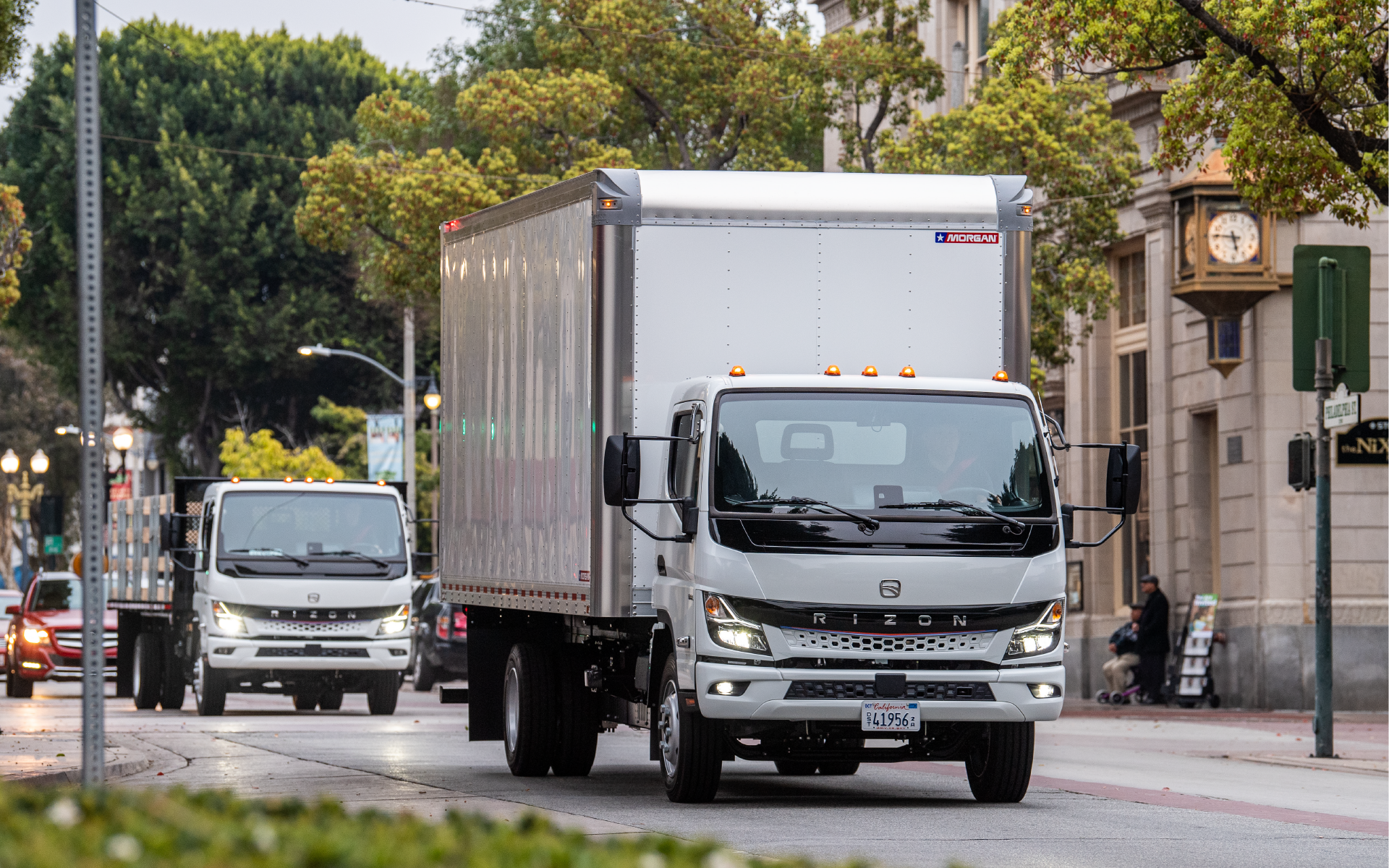
An electric commercial vehicle is no longer a theoretical concept for fleets, it’s a practical option in specific, well-defined operations.
For businesses and public fleets, the real question has shifted from “Can we electrify?” to “Where does an electric commercial vehicle make practical and economic sense for our routes, duty cycles, and charging strategy?”
What Is an Electric Commercial Vehicle?
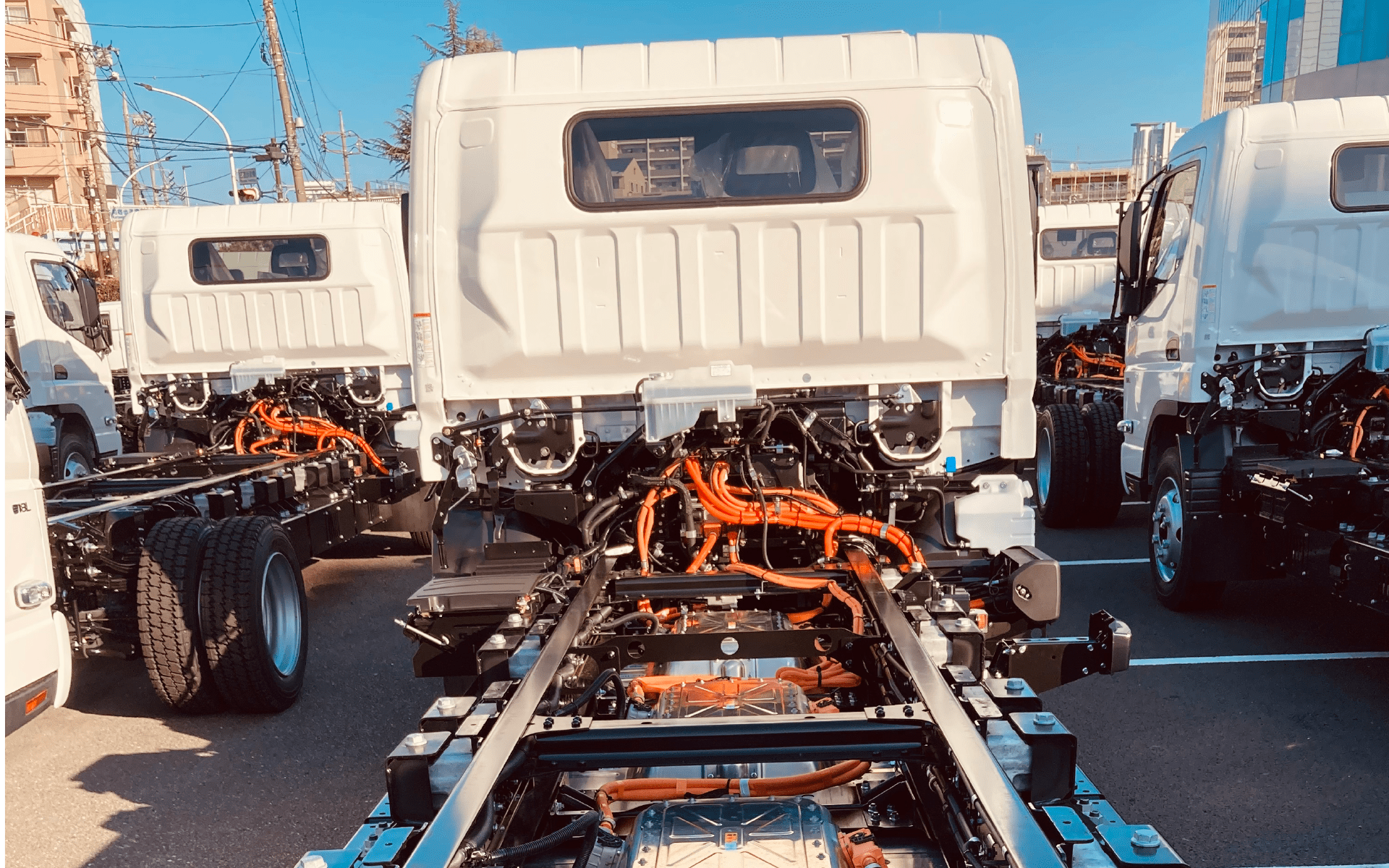
An electric commercial vehicle is designed and used primarily for business, fleet, delivery, municipal, or vocational operations—not personal transportation.
Unlike passenger EVs, electric commercial trucks and utility vehicles are engineered around payload, body upfits, duty cycle, and fleet operations, serving roles such as delivery trucks, box trucks, work trucks, municipal vehicles, utility units, and other vocational trucks.
Where a passenger EV focuses on driver comfort and individual travel, a commercial electric vehicle is built to support revenue-generating or public-service work.
Real-World Electric Commercial Vehicle Use Cases: RIZON Fleets
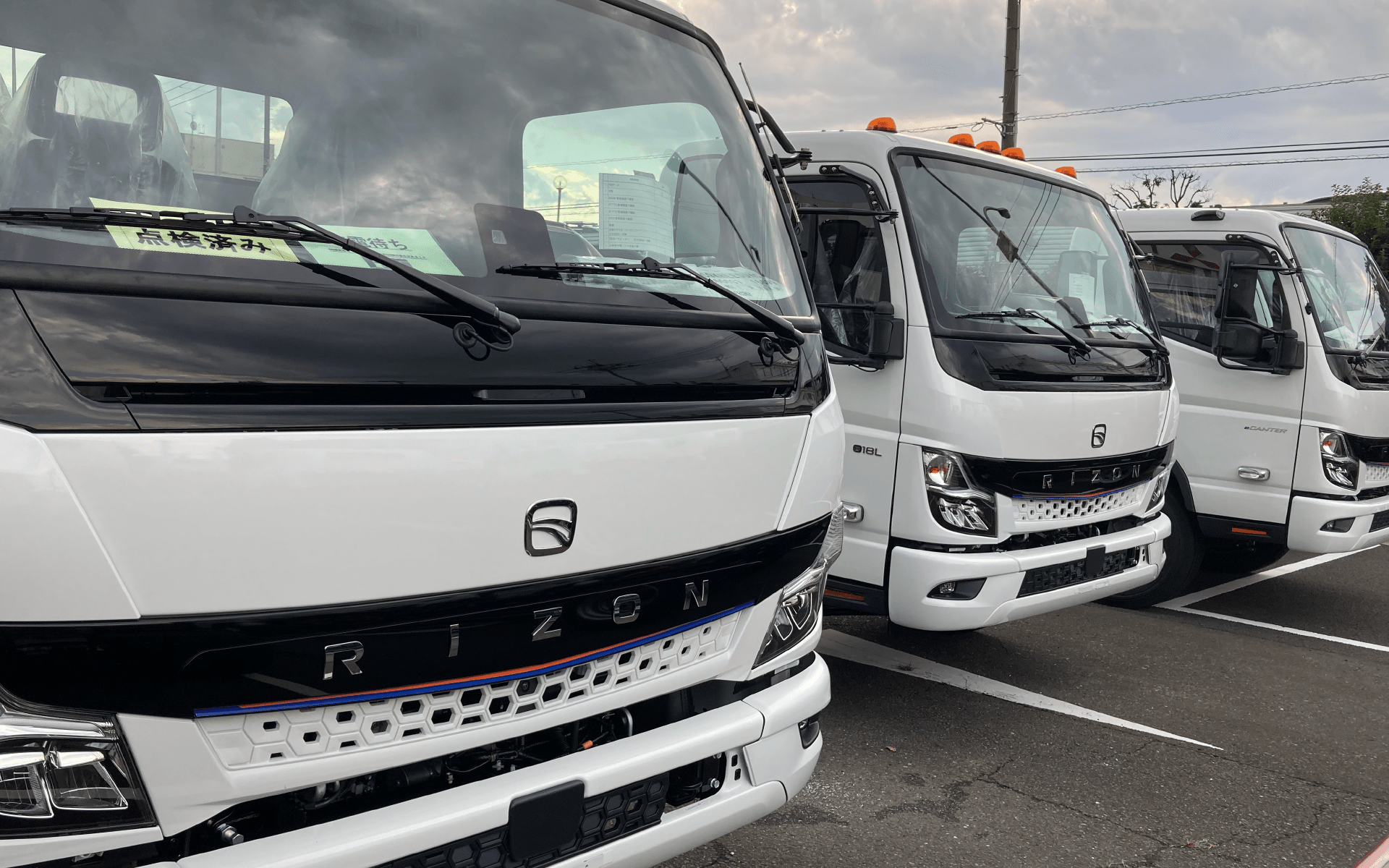
RIZON’s deployments illustrate how fleets are already using electric commercial trucks in everyday operations across North America, based on RIZON press and journal materials.
• Republic Master Chefs – Urban Delivery with Box Bodies
Operates five RIZON box trucks to deliver textiles and linens to hospitality and food service customers throughout Southern California.
• Plett Truck Repair – Customer Service Box Trucks
Plett Integrated two medium-duty RIZON box trucks into customer service operations in British Columbia, using zero-emission vehicles to support regional commercial vehicle service and transport needs.
• Municipal Fleets – Public Works and City Services
An increasing number of municipalities are deploying RIZON trucks into their fleets, including the City of Bakersfield, which operates six flatbed trucks for waste collection and cleanup. Other public-sector adopters include the City of Vancouver, Victoria, El Cajon, Claremont, La Mirada, and the Port of Los Angeles among others.
• LA Sanitation & Environment (LASAN) – Residential Bin Delivery
LASAN deployed seven RIZON e18L stake-bed trucks to deliver home trash bins to Los Angeles residents as part of the City’s environmental programs and initiatives.
Entertainment Venue – Refrigerated Trucks in Southern California
A popular Southern California entertainment venue added three RIZON trucks, two refrigerated and one tool truck, for on-site logistics, helping move equipment and perishables quietly and without tailpipe emissions throughout its theme park without disturbing patrons.
• Local and regional delivery fleets
• Food distribution
• Municipal and public-sector operations
• Urban logistics and last-mile services
The common thread is predictable routes, clear payload needs, and return-to-base behavior that supports planned fleet charging.
Why Businesses and Municipalities Are Turning to Electric Commercial Vehicles
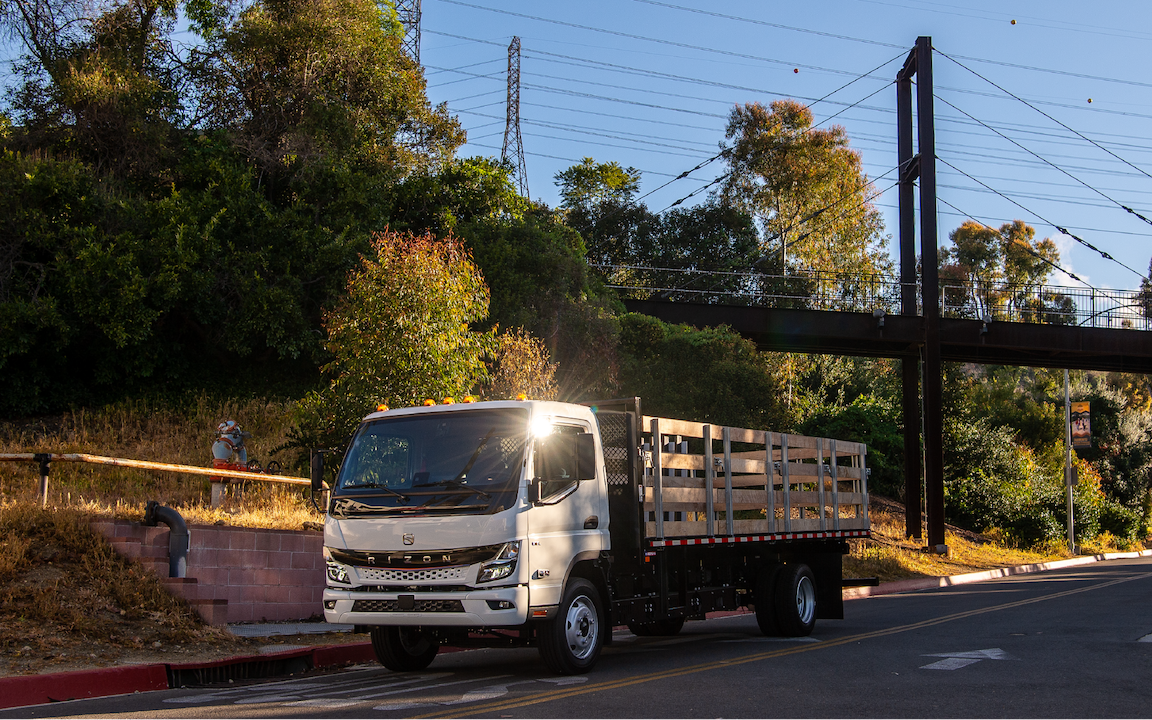
Fleets are exploring commercial EV options for practical, operational reasons rather than purely for image or experimentation. Key drivers include:
• Predictable routes: Many medium-duty truck operations such as local delivery, service fleets, and municipal routes follow consistent daily mileage and fixed territories. This predictability aligns well with known battery range and planned charging.
• Local and regional operations: An electric commercial truck is particularly suitable for local and regional distribution where vehicles rarely exceed a defined distance from their base of operations.
• Centralized depots: A commercial fleet that parks vehicles at a central location each night can plan depot charging and avoid relying solely on public DC fast charging.
• Fuel cost exposure: Diesel price volatility can be significant. Electricity pricing is also variable, but fleets with good data and structured charging can sometimes reduce energy cost per mile compared with diesel, depending on local rates and time-of-use tariffs.
• Emissions regulations and zones: In certain regions, tightening emissions rules and emerging zero-emission zones increase the appeal of a zero-emission commercial vehicle, particularly for urban operations.
• Reduced routine engine maintenance: A battery-electric vehicle has no diesel engine, fuel system, or exhaust aftertreatment to maintain, which can reduce specific categories of maintenance over time.
• Duty-cycle suitability: Many fleets have duty cycles (stop-and-go urban delivery, predictable municipal routes) that fit well with the characteristics of an electric truck, including regenerative braking and lower local emissions.
These are application-driven reasons. Electrification is not universally superior—its advantages are strongest when the vehicle’s job matches what an electric commercial vehicle does well.
Where Electric Commercial Vehicles Make the Most Sense
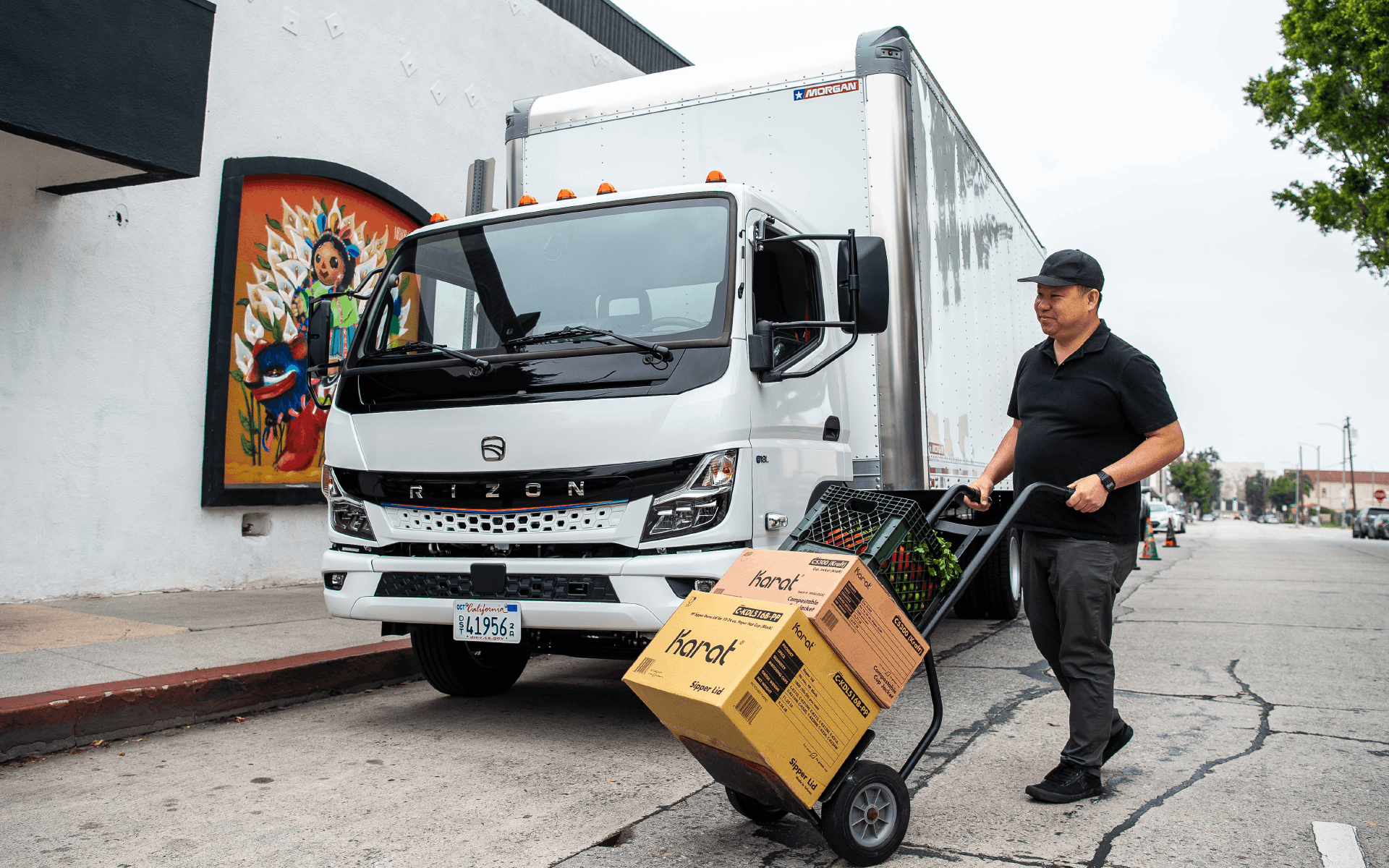
Electric commercial trucks are particularly strong in operations where route and charging can be planned around the vehicle’s capabilities. Typical high-fit applications include:
• Local and regional delivery: Box trucks and medium-duty electric truck models running parcel, food and beverage, or retail distribution routes with known daily mileage and return-to-base schedules.
• Last-mile operations: Dense, stop-and-go urban routes benefit from regenerative braking and reduced tailpipe emissions.
• Municipal and public fleets: City maintenance trucks, parks and recreation vehicles, and certain public works units often have defined service areas, centralized parking, and predictable daily utilization.
• Utility and service fleets: Electric work trucks used by trades, utilities, and technicians often operate within a set territory and return to a yard or depot.
• Vocational operations: Stake beds, flatbeds, and certain dump bodies used in urban construction support work can be well-suited to the consistent, moderate-range duty cycles of a commercial electric vehicle.
These scenarios share common traits:
• Predictable daily mileage that can be matched to battery capacity
• Return-to-base operations that support reliable depot charging
• Known dwell time (hours parked) that allows charging to occur without disrupting vehicle uptime
• Clear payload requirements that can be matched to a purpose-built electric commercial truck
When these elements line up, fleet electrification can be evaluated with relatively high confidence.
The Business Case: Maintenance and Operating Costs
Understanding the business case for an electric commercial vehicle requires comparing not just purchase price, but ongoing maintenance and energy costs with a comparable diesel truck.
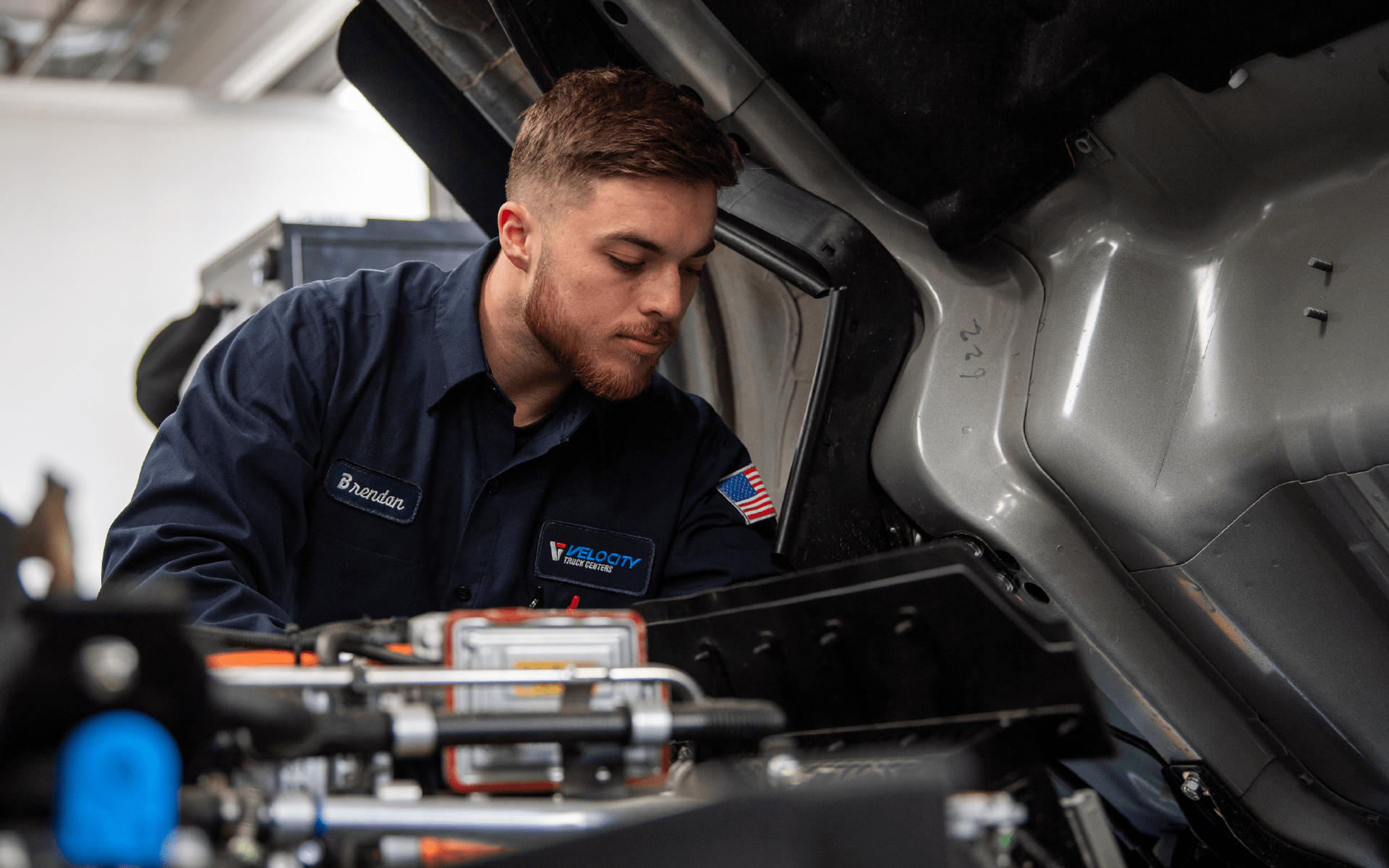
Maintenance Differences: Electric vs. Diesel
A battery-electric vehicle eliminates many engine-related maintenance items common to diesel medium-duty trucks:
• No engine oil changes
• No oil filter changes
• No diesel fuel system maintenance (injectors, pumps, fuel filters in the same way)
• No exhaust aftertreatment systems such as diesel particulate filters and selective catalytic reduction, which require inspection, service, and sometimes replacement
This does not mean EV maintenance disappears. Electric trucks still require:
• Tires, brakes, and suspension repairs and replacements
• Steering, chassis, and body upfit maintenance
• HVAC, door, liftgate, and refrigeration service where applicable
• Periodic inspections of high-voltage components and cooling systems as specified by the service provider
Regenerative braking can reduce friction brake wear in many duty cycles, but the effect is highly dependent on route and driver behavior.
Energy Costs: Electricity vs. Diesel

Operating cost comparisons must be made on a route-specific and fleet-specific basis. Key considerations include:
• Electricity pricing: Rates vary by utility, region, time of day, and the specific commercial rate plan. Some fleets can benefit from lower off-peak prices; others face demand charges or higher business-rate structures that increase their overall electricity costs.
• AC depot charging: Vehicles that return to a depot and have sufficient dwell time can often use AC charging, which tends to have lower equipment and infrastructure costs than high-power DC charging. This can improve economics if charging is aligned with lower-rate periods.
• Charging strategy: Charging during peak hours or relying heavily on public DC fast charging can reduce or eliminate energy cost advantages. Thoughtful charging schedules can be as important as choosing the right truck.
• Diesel cost per route: Comparing electricity and diesel costs should be done per mile or per route, accounting for local diesel pricing, vehicle efficiency, and any idling patterns.
A strong business case emerges where:
1. Maintenance savings on engine and exhaust components are meaningful for the fleet’s specific duty cycle, and
2. Energy costs per mile for electricity, under a realistic charging plan, compare favorably with diesel costs.
Neither outcome is guaranteed, which is why careful analysis is essential.
Did You Know? Fleet Charging and Overnight Dwell Time
Many commercial fleet vehicles spend most nights parked at the same depot or yard. When dwell time is 8–12 hours or more, fleets can often charge trucks at lower-power AC charging levels that still fully recharge the battery before the next shift. This approach can reduce dependence on public DC fast charging and allow fleets to align charging with off-peak electricity rates, where available.
Why AC Charging Can Improve the Business Case
For many fleet operations, the right question is not “How fast can we charge?” but “When and where is charging most economical and operationally practical?”
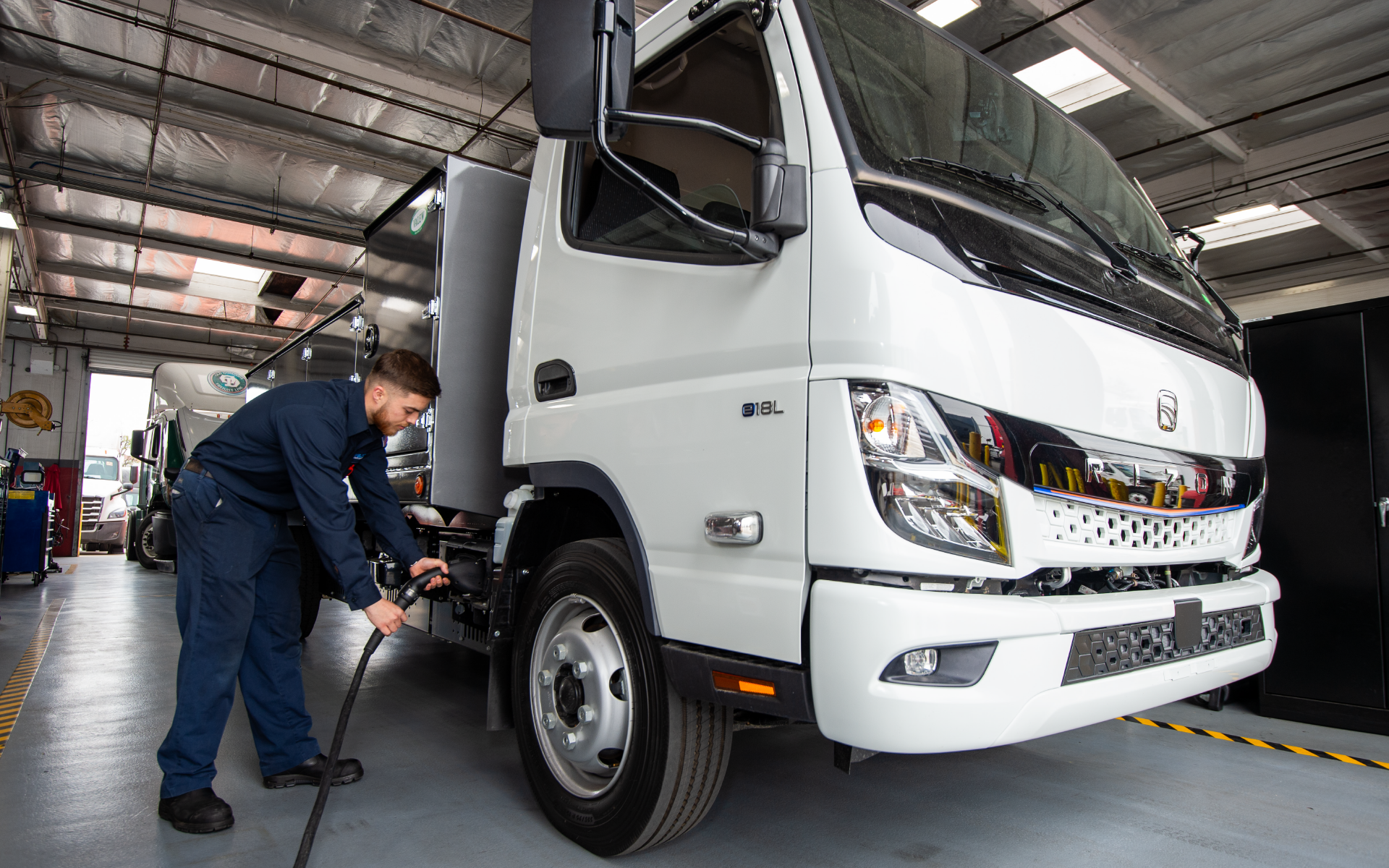
The Role of Depot AC Charging
Depot charging based on AC power can offer distinct advantages:
• Overnight charging: Vehicles parked for the night can be fully recharged using Level 2 AC chargers, assuming battery capacity and daily usage align with the available charging time.
• Dwell time utilization: Long dwell periods (overnight, weekends) turn “parked time” into “charging time,” minimizing impact on work hours.
• Electricity pricing control: Charging at a fleet’s own location provides more control over scheduling, making it easier to avoid peak-rate periods or manage demand.
• Infrastructure costs: AC charging equipment usually costs less and is simpler to install than high-output DC fast charging, which can require more extensive electrical upgrades.
AC charging is not automatically cheaper in every scenario—local tariffs, demand charges, and grid constraints matter. But for many medium-duty truck routes, depot AC charging aligned with predictable vehicle dwell time can materially improve the total cost of ownership of an electric commercial vehicle.
When an Electric Commercial Vehicle May Not Be the Best Fit

An electric commercial vehicle is not a one-size-fits-all replacement for diesel. Some operations are challenging for current battery-electric technology or available infrastructure:
• Very long and unpredictable routes: Long-haul or irregular routes that can’t be reliably covered by the vehicle’s range and available charging may be better suited to diesel, at least for now.
• Limited access to reliable charging: Rural or remote operations without practical depot or public charging options face significant hurdles.
• Minimal tolerance for downtime: Applications requiring continuous operation with little or no scheduled downtime may struggle if charging windows cannot be built into the schedule.
• High-energy or highly variable duty cycles: Certain heavy vocational uses, off-road work, or power-intensive auxiliary loads can stress battery capacity, especially when energy demand varies day to day.
These are not absolute barriers, but they make the decision an application-matching exercise. The right approach is to evaluate whether a given route, body configuration, and duty cycle align with what a commercial electric vehicle can realistically deliver.
RIZON and Commercial Electric Truck Applications
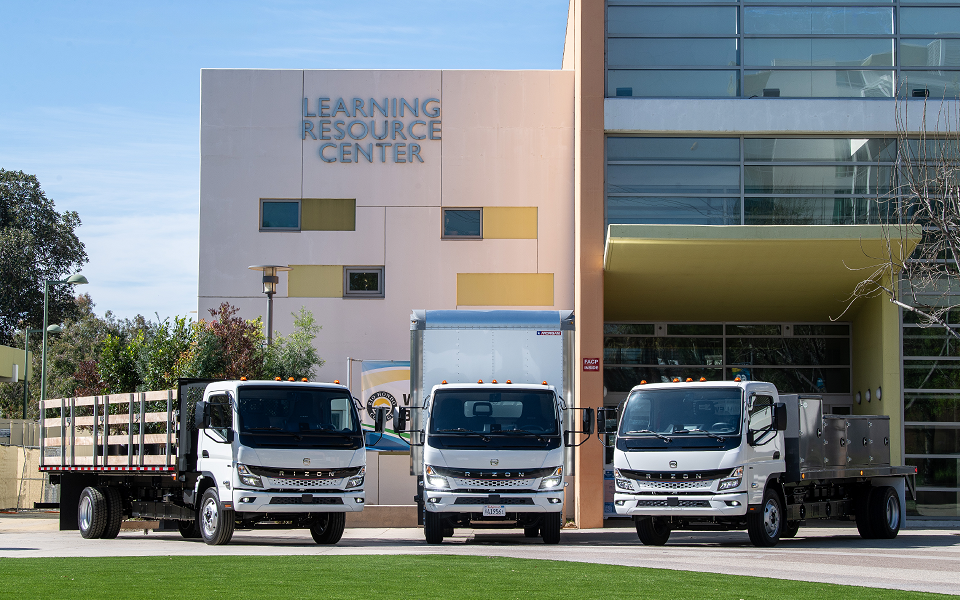
RIZON is an OEM brand of medium-duty electric trucks serving businesses and public fleets in the United States and Canada. RIZON offers purpose-built electric commercial trucks designed for real-world applications such as:
• Delivery operations and box trucks: Configurations suitable for urban and regional distribution, parcel delivery, and general freight.
• Flatbeds and stake beds: For construction support, materials handling, and vocational tasks that return to a depot.
• Dump bodies and utility upfits: Options aimed at municipal and public works use cases.
• Refrigerated applications: Electric trucks configured for cold-chain and food distribution within defined ranges.
By focusing on medium-duty segments, RIZON illustrates how commercial vehicle electrification is already being deployed in:
• Municipal fleets and public-sector operations
• Local and regional delivery fleets
• Urban service and vocational fleets
The emphasis is on matching truck configurations, bodies, and range capabilities with specific jobs, highlighting how a purpose-built commercial electric truck can be a better fit than pressing a light-duty EV into a medium-duty role it was not designed to perform.
How to Decide Whether an Electric Commercial Vehicle Is Right for Your Fleet

A structured evaluation helps fleets decide if an electric fleet vehicle is appropriate for a given job. Key questions include:
• Daily mileage: How many miles does the vehicle typically travel each day? What are the minimum and maximum ranges?
• Route pattern: Does the truck return to the same location at the end of each shift, enabling depot charging?
• Dwell time: How long is the vehicle parked between shifts (overnight, midday, weekends), and can charging be scheduled during that time?
• Payload and body requirements: What payload is required, and which body or upfit (box, flatbed, stake bed, dump, refrigerated body, utility upfit) is needed?
• Current diesel cost: What is the effective diesel cost per mile for this route, considering local fuel prices and vehicle efficiency?
• Electricity rates: What commercial electricity tariffs and time-of-use rates are available from local utilities?
• Charging infrastructure: What fleet charging infrastructure (AC depot charging, potential DC fast charging) can realistically be installed, and on what timeline?
• Maintenance baseline: What maintenance costs are currently associated with your fleet, especially around engines, exhaust aftertreatment, and fuel systems?
The best decisions come from evaluating the complete operation—routes, duty cycles, energy pricing, and maintenance—rather than comparing vehicles only by sticker price or advertised range. Medium-duty electric trucks from OEMs can then be assessed against these criteria to determine where an electric commercial vehicle is the right fit.
Electric Commercial Vehicles as a Real Fleet Tool

The electric commercial vehicle market has moved beyond pilot projects and early demonstrations. Today, fleets can evaluate real products, proven configurations, and documented applications in delivery, municipal, and vocational operations. Electric commercial trucks occupy a clear and growing role in commercial transportation, especially where predictable routes, return-to-base operations, and thoughtful fleet charging strategies are in place.
They are not the right solution for every route or business—but for many medium-duty applications, they are already a practical tool for meeting operational, regulatory, and cost objectives. OEM platforms like RIZON’s medium-duty electric trucks show how purpose-built commercial EVs are supporting businesses and public fleets across North America today, providing a concrete foundation for fleets to decide where electrification makes the most practical and economic sense.